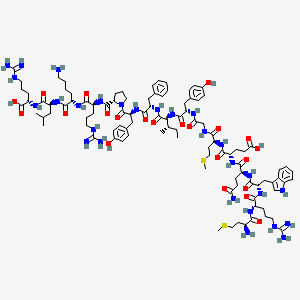
Discovered MOTS-c as a mitochondrial-derived peptide that regulates metabolic homeostasis. Cohen lab data demonstrates AMPK activation, improved insulin sensitivity, and exercise-mimetic signaling in mouse models. Translation to human therapy remains pre-clinical.
Source →MOTS-c
16-amino acid mitochondrial-encoded peptide. Improves insulin sensitivity and metabolic flexibility in aging models.
Evidence is experimental. Most claims trace to limited human studies or animal models. Treat as a research direction, not a protocol.
Mitochondrial-derived peptide encoded within the 12S rRNA gene. Activates AMPK, regulates folate-methionine cycle. Mouse studies show improved glucose homeostasis and exercise capacity. No published human RCTs as of late 2025.
No published human RCTs. Source quality grey-market. Treat all dosing claims as extrapolation from preclinical work.
Stack doesn't rank peptides — we surface the diversity of opinion. Each card paraphrases a public-record stance from a named source. Where they conflict is where you should slow down and read both.
C-tier — currently taking it but unconvinced. "Just haven't enough studies to show that... if I'm going to put in a video and say it's A tier just cuz I'm taking it" he won't. Notes price ($50-100 for 5-10mg, ~1 week) high relative to evidence.
Per-claim grading. Each claim is graded independently — same peptide, different claims can carry different grades.
- CLimited evidence
MOTS-c modulates AMPK and improves insulin sensitivity in animal models of metabolic disease
1 supporting referencesVerified 5d ago - AStrong evidence
MOTS-c is on FDA's PCAC reclassification track (review July 23-24 2026)
0 supporting referencesVerified 5d ago
External links to PubMed searches, ClinicalTrials.gov, and FDA materials. We do not host papers — we point at canonical sources.
Pre-filled with this compound's published dose range: 5-10 mg · twice weekly
Draw volume exceeds 100 units (1 mL). Either reduce dose or split into multiple injections.
Calculator is a discussion tool. Verify reconstitution + dosing with a qualified provider. Stack is not a prescription source. Use sterile technique and inspect every vial.
How much a first cycle actually costs across the channels people use. Pick the protocol length you're considering — Stack multiplies the monthly band by cycle weeks. Same caveats apply: ranges are facts, quality varies, this is not legal advice.
Numbers reflect publicly-advertised price ranges, not vendor quotes. Insurance, prescription costs, and shipping aren't included. Channels marked unavailable are filtered out.
See pharmacies for this compound →Approximate monthly cost across the channels users actually consider — brand FDA-approved retail, US 503A compounding, Mexican pharmacies, MX farmacias magistrales, and the research-grey market. Stack lists ranges, not vendor names. Quality varies wildly across channels — see each band's note.
Research-grey only — no FDA pathway. Highest per-mg cost in the longevity-peptide space due to synthesis complexity. Eric Janicki (2026) cited $50-100 for 5-10 mg lasting ~1 week.
As of 2026-04Public-source attribution across the production + distribution chain. Stack does not endorse vendors — this is who is in the chain, not which one is best.
Peptide Partners
Research3rd-party COA per batchFinnrick ✓US · CA · AU · UKOne of the most consistently recommended vendors on r/Peptides since the Peptide Sciences shutdown (March 2026). Third-party COA published per batch. HPLC purity ≥99%.
For laboratory use only / not for human consumption. Stack may earn affiliate commissions.
Paradigm Peptide
Research3rd-party COA per batchFinnrick ✓US · CALong-established US vendor (7+ years). Broad catalog including GHRPs, GHRHs, and cognitive peptides. Third-party HPLC and mass-spec COA per batch. Active Finnrick Analytics coverage.
For laboratory use only / not for human consumption. Stack may earn affiliate commissions.
XL Peptides
Research3rd-party COA per batchFinnrick ✓US · CA · AUKnown for above-average catalog depth, including harder-to-find compounds (SS-31, humanin, Foxo4-DRI). Third-party HPLC published. Active Finnrick coverage.
For laboratory use only / not for human consumption. Stack may earn affiliate commissions.
FDA Cat. 2 removed Apr 2026 — PCAC review Jul 23-24, 2026
PCAC review · July 23-24 2026 panel
FDA's Pharmacy Compounding Advisory Committee scheduled to review the first cohort of peptides removed from Category 2 in April 2026. The 7 peptides on this docket are the highest-profile community names — BPC-157, TB-500, MOTS-c, Epitalon, DSIP, Semax, KPV.
FDA removes 12 peptides from Category 2 'significant safety concerns' list
FDA published a Federal Register notice on April 15 2026 removing 12 peptides from the Category 2 ('significant safety concerns') compounding list, paving the way for PCAC review for inclusion on the 503A bulks list. Peptides removed: BPC-157, TB-500, Epitalon, GHK-Cu (injectable), MOTS-c, DSIP, Dihexa Acetate, MK-677, Melanotan II, KPV, Semax, LL-37.
FDA places peptides on Category 2 'significant safety concerns' list
FDA's Pharmacy Compounding Advisory Committee categorized a wide list of peptides as Category 2 ('significant safety concerns'), effectively banning their compounding at 503A and 503B pharmacies. Affected: BPC-157, TB-500, Epitalon, GHK-Cu, MOTS-c, DSIP, Dihexa, MK-677, Melanotan II, KPV, Semax, Selank, LL-37 and others.